The Graduate School Lectures in association with the CLCC
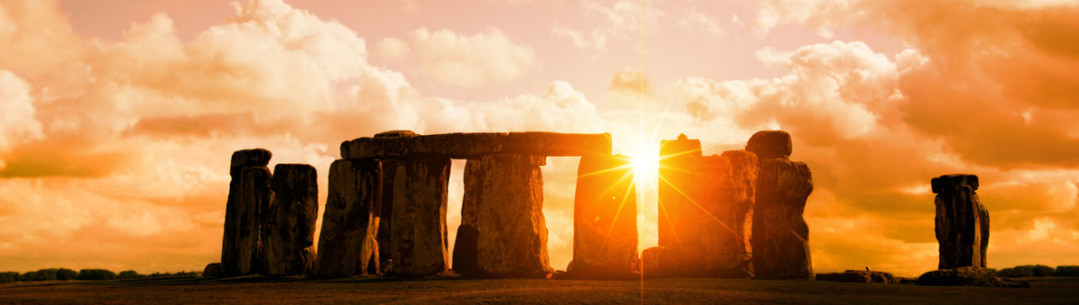
“Culture is the process by which a person becomes all that they were created capable of being.”― Thomas Carlyle (1795 – 1881)
At a Glance
- Live online course
- 1 hour a week
- Tuesdays 18:00 - 19:00
- 5 weeks: January to March
- Tutors: Various
- Fee: FREE
- Imperial College attendance certificate (T&Cs apply)
In association with Imperial College Graduate School
This course is only open to Imperial College graduate students (MSc / PhD) and Imperial College staff
The Graduate School Lectures, held in association with the Centre for Languages, Culture and Communication (CLCC), is a 6-week lecture course for graduate students and staff at Imperial College London and its associated medical school, in which we are going to explore a range of ideas in the arts, humanities and social sciences.
Each week a different specialist will introduce their research subject, taking us into diverse worlds ranging from art history, literature, film studies and philosophy to design history, music theory and literature.
You do not have to be knowledgeable or an expert in any of these topics, as each week the tutor's task will be to explain their subject to you, the topic they will be looking at and giving you some of the basic to take your studies further if you want to.
There is no practical work, homework or preparation needed, just an open mind and the ability to spend an hour or so listening to expert academics from the arts, humanities and social sciences present some of the ideas that get them excited.
Certification
Imperial College graduate students (MSc and Phd) who register for the course of lectures will receive an attendance certificate at the end of the programme.
Delivery
All lectures are delivered online using Zoom.
Course Information
Course Programme
Your Programme
1. Tuesday 25 January 2022 - Dr Michael Paraskos on 'Sex and Surrealism'
Surrealism is one of the most well-known modern art movements, with the work of Salvador Dali, Rene Magritte and Juan Miro familiar to many of us. But Surrealism is not really a style of art, it is an approach to understanding creativity that is rooted in Freudian explanations for the unconscious mind. This inevitably made Surrealist artists in the early twentieth century aware of Freudian theories of sex and libidinous desire, all of which had a profound impact on their art.
2. Tuesday 8 February 2022 - Dr Matthew Rowe on "Art, Science & Philosophy - an uneasy but revealing relationship"
3. Tuesday 22 February 2022 - Dr Bruno Bower on 'A Violinist Settles Down: Performers and Celebrity in the 19th Century'
The nineteenth century saw the emergence of some of the first musical 'celebrities' in the modern sense. As aristocratic patronage declined and independent careers became increasingly standard, these performers were able to exploit the latest technological innovations to spread their name far and wide. In the process, several different kinds of performer emerged depending on the kind of music they played and on how they styled themselves. The shifting patterns between them set in motion trends that have persisted through to the present day.
4. Tuesday 8 March 2022 - Vivienne Lawes on "Revolution in the Art School: The Bauhaus (1919 – 1933)"
At the same time as the Art Deco design movement was sweeping Europe and North America, the Bauhaus in Germany was revolutioning design and design education in ways we are still living with today. Although it only ran for 14 years, as its staff escaped Nazi persecution in Britain and America, Bauhaus ideas were exported across the globe, eventually forming the basis of art foundational training in numerous countries around the world. The Bauhaus was unusual for an art school of the period in that it encouraged students to produce work in the avant-garde modernist style in all fields of art, design and architecture, with an eye to industrial production – all at a time when most other art schools were still asking students to draw from plaster casts of classical sculpture. Join Viv to discover more about this most revolutionary of art and design schools.
5. Tuesday 22 March 2022 - Dr Eleonora Sammartino on 'For a Silent Film "Herstory"'
This talk will be looking at the key role that women played in the film industry at the early stages of cinema history. Through the case of some of the most well-known filmmakers of the period, as well as some less widely-known ones, we will look at how women in different roles, both in front and behind the camera, shaped cinema at the time.
Programme may be subject to change without notice.
Additional Reading
There is no requirement to undertake specific reading for this course.
Your Tutors
Each week a different speaker takes this class. We draw our speakers from a range of different departments at Imperial, including the CLCC, and also from outside Imperial College.
Course Delivery Method: Live Online (Zoom)
All our online courses are taught live which means you will be taught alongside other students on the course by a tutor at a specific time. To take part in the course you must be able to attend the online session at the time stated for the course description.
All times stated are British Standard Time.
To take part you will need a computer, or laptop, or tablet computer, connected to the Internet. The device you use will also need to have a camera, microphone and speakers. Most devices now have these built in, but if not you might have to buy them from a computer shop and to connect them to your device.
Zoom
This course will use Zoom as its online delivery method. Zoom is very easy to use and you do not need to set up a Zoom account to use it. Near the date of your first online session you will be sent an email with a web address (or URL) that will allow you to access the course. This is called the Course Link. All you need do is click on the Course Link in the email and you will be asked to enter your name. This is the name that will be seen by your tutor and other students in the class.
Once you have entered your name you might be asked to enter a password to enter the class. The password will be included in the email sent to you. Once you enter the password you will either be taken directly into the class, or asked to wait in a virtual waiting room until the tutor is ready to let you into the class.
We have also produced a Handy Guide to Zoom [pdf] which gives you basic information on how to use it.
Any Questions?
Questions regarding the content and delivery of this course should be sent to the course coordinator, Dr Michael Paraskos at m.paraskos@imperial.ac.uk