


Data Science
We live in a time where information about most of our movements and actions is collected and stored in real-time thanks to technological advancements. A large number of increasingly small sensors are used everywhere (from mobile phone to IoT devices) while advances in data storage, indexing, and processing platforms allow us to store and process data cheaply and efficiently: “It is now cheaper to keep data rather than to delete it”. Data science strives to develop the methods and tools to unlock the value in massive amounts of data safely and ethically.
Interdisciplinary in nature, it employs theories and techniques from computer science, statistics, machine learning, and mathematics to understand, analyze and potentially affect human, physical, and societal phenomena. Big data from credit card transactions, browsing history, social networking, genetic tests or many other sources have the potential to radically transform science and industry with Harvard Business Review calling Data Scientist “the sexiest job of the 21st century”.
The Department of Computing at Imperial, along with Imperial’s Data Science Institute, creates a unique environment for Data Science by bringing together world-leading computer scientists along with researchers in medicine, biology and the social sciences. Our work aims to revolutionize applications in medicine, cyber-security, development economics, bioinformatics, behaviour analytics and many more.
Related videos
Introducing the Data Science Institute
The Data Science Institute is a cross-faculty body set up to coordinate data science research at Imperial. This video introduces the diverse scientific disciplines at the core of the Institute and its potential impact on the modern world.

Introducing the Data Science Institute
Data science is the driving force of the new economy.
The Data Science Institute is a cross-faculty body set up to coordinate data science research at Imperial. This video introduces the diverse scientific disciplines at the core of the Institute and its potential impact on the modern world.
Are you dining on data?
Data Science Insights - Are you dining on data? (highlights)
At this event Derek Scuffell, Syngenta R&D Data Strategist, and Judith Batchelar, Director of Brand at UK supermarket chain Sainsbury's, each shared insights in how their supply chains are driven by data and how the world will be able to feed itself in the future because of data.
Building Brains: Learning from data
Data Science Insights - Building Brains: Learning from data (highlights)
At this event Professor Steve Furber CBE from the University of Manchester, talked about how his new hardware architecture, SpiNNaker, is pioneering neural network research and then shared insights into how progress in his field will develop computer-based intelligence. Axel Threlfall, editor-at-large at Reuters, chaired this event.
Research groups and centres
Academics
Academics
-
Dr Yves-Alexandre de Montjoye

Personal details
Dr Yves-Alexandre de Montjoye Senior Lecturer in Data Science InstituteSend email+44 (0)20 7594 0991
Research interests
Data Privacy, Machine Learning for biometric and behavioral identification, Infrastructure for the safe and anonymous use of data, Data Science for Good.
Location
Data Science Institute, William Penney Laboratory
-
Dr Marc Deisenroth

Research interests
Statistical Machine Learning, Robotics, Control, Time-Series Analysis, Signal Processing.
-
Dr Aldo Faisal

Research interests
Neurotechnology, Biomedical Engineering, Machine Learning, Algorithmic Prediction of Human Behaviour.
Location
407A, Huxley Building
4.08, Royal School of Mines -
Dr Arthur H C Gervais

Research interests
My research focuses on the security, privacy and performance of blockchain technology. Because this technology is still in its infancy, I largely focus on understanding and quantifying the tension points and tradeoffs in terms of security, privacy and performance, with the goal to build a mainstream, scalable, open, and decentralized blockchain.
Location
354, ACE Extension
-
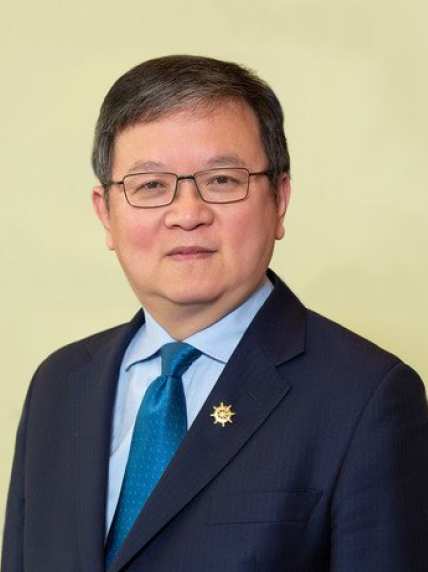
Prof. Yi-Ke Guo
Research interests
Knowledge Discovery, Data Mining and Large-Scale Data Management.
Location
211A, William Penney Laboratory
-
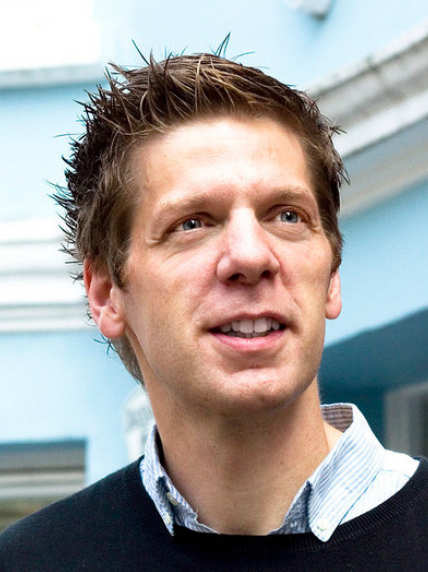
Dr Thomas Heinis
Research interests
Scientific Data Management, Distributed Data Processing, Spatial Databases, Indexing.
Location
423, Huxley Building
-
Prof. William Knottenbelt
Personal details
Prof. William Knottenbelt Professor of Applied Quantitative AnalysisSend email+44 (0)20 7594 8331
Research interests
Application of mathematical modelling techniques to real life systems. modelling and optimisation in parallel queueing systems (especially split-merge and fork-join systems), modelling of storage systems, stochastic modelling of sport, stochastic modelling of healthcare systems, resource allocation and control in cloud-computing environments, numerical solution of (semi-)Markov models and specification techniques for SLA specification, compliance prediction and monitoring.
Location
363, ACE Extension
-
Dr Peter McBrien

Research interests
Data Integration, Information Systems Modelling and Distributed Databases
Location
428, Huxley Building
-
Prof. Peter Pietzuch

Research interests
Distributed Systems, Systems and Data Management and the Design and Engineering of Scalable, and Reliable and Secure Large-Scale Software Systems.
Location
442, Huxley Building
-
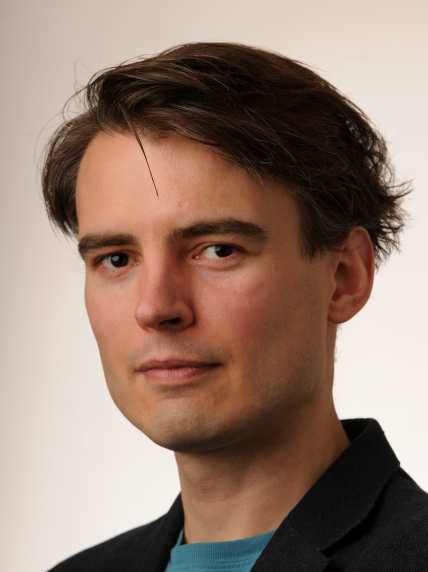
Dr Holger Pirk
Research interests
My research interests lie in analytical query processing on memory-resident data. In particular, I study storage schemes and processing models for modern hardware.
Location
431, Huxley Building