


Devices
MRI compatible robot
We developed MRI compatible robotic interfaces for neuroscience investigations first in callabration with Hannes Bleuler and Roger Gassert from EPFL, then in London for the study of brain activity in neonates.
Wrist flexion/extension interface
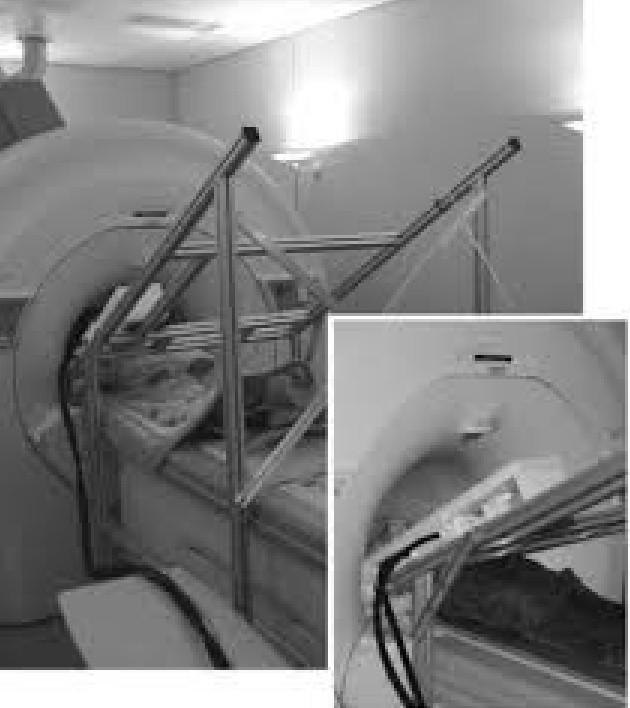
First fMRI compatible haptic interface, made in plastic with a hydraulic transmission to bring the power from the control to the scanner room.
[Gassert et al. (2006) IEEE/ASME Transactions on Mechatronics 11(2): 216-24]
Planar arm manipulation

A well designed fMRI compatible haptic interface providing quality force fields during arm movements despite a 10m long hydraulic transmission. However arm movements induce head motion thus artifacts in the image.
[Gassert et al. (2006), Proc IEEE Int Conf on Robotics and Automation (ICRA) 3825-31]
Cable Interface

This cable transmission study revealed an excellence transmission through the cable (without the heavy infrastructure of the hydraulic transmission), but requires a rigid support.
[Chapuis et al. 2006, Proc IEEE/RAS-EMBS Int Conf on Biomedical Robotics and Biomechatronics (BioRob)]
Passive interface
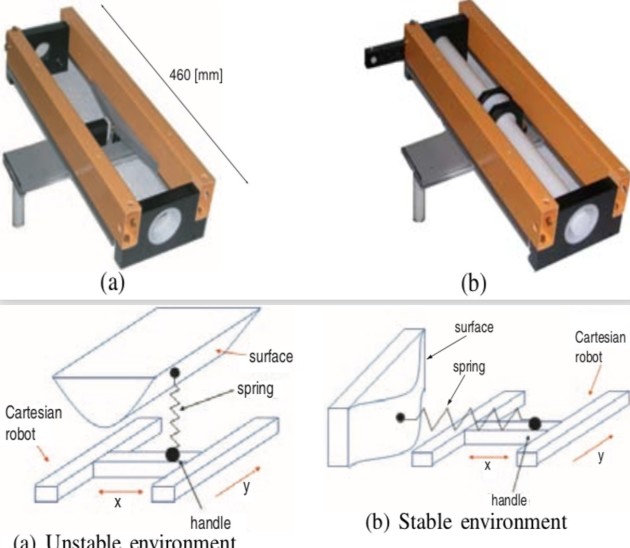
Interface without actuators using spring energy to yield various force fields.
[Dovat et al. (2005) Proc IEEE Engineering in Medicine and Biology Conf (EMBC) 5021-4]
fMRI compatible Hi5
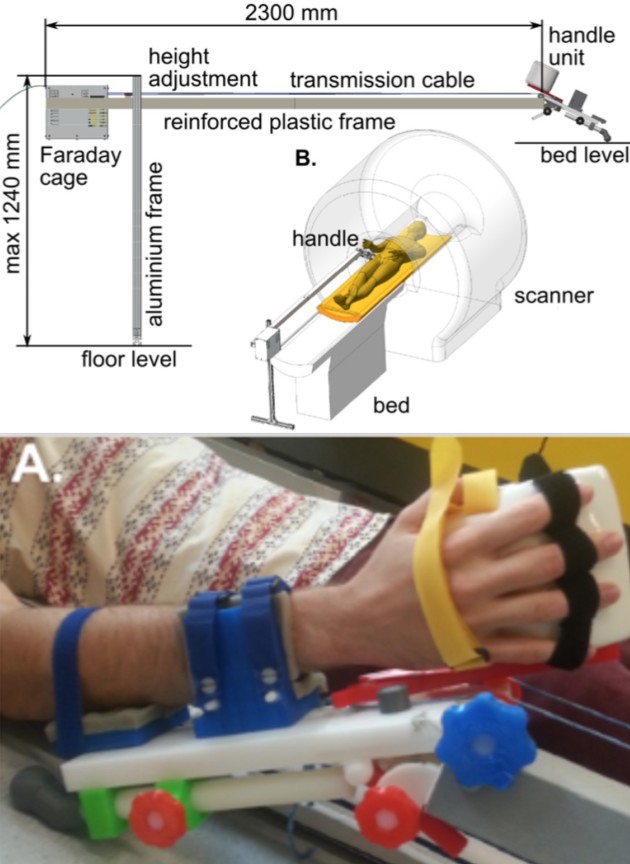
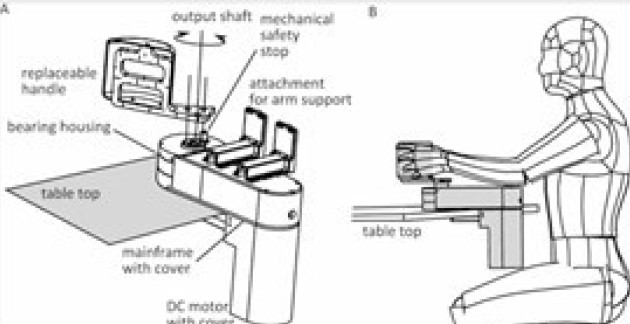
A portable and compact wrist flexion/extension interface that can be installed or disposed in 15'. The concept uses a cable transmission to a shielded box transmitting information to the control room via optical fibers.
[Farkhatdinov et al. (2015) Proc IEEE WorldHaptics 196-201]
Wrist and ankle interface for neonates
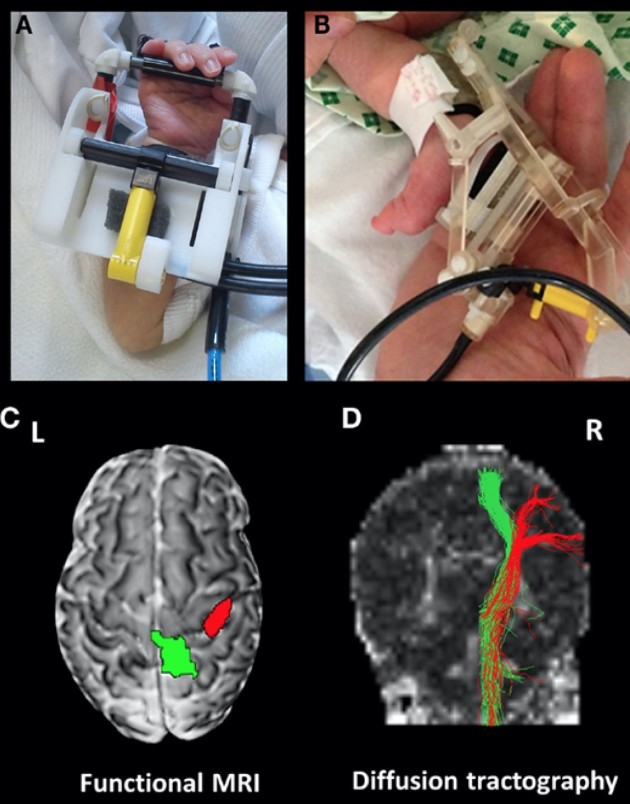
We developed fMRI compatible robotic interface to study the brain activity in infants born preterm at risk of cerebral palsy. A pneumatic transmission was used to elicit periodic movements. We used first a balloon of the size of the neonate's hand, then a wrist interface integrating a position sensor done with an optical fiber. An ankle interface was also developed.
[Allievi et al. (2013) Annals of Biomedical Engineering 41(6): 1181-92]
Rehabilitation devices
We have developed endpoint-based devices to train typical functions of the hand and upper limb in neurologically impaired individuals.
HapticKnob
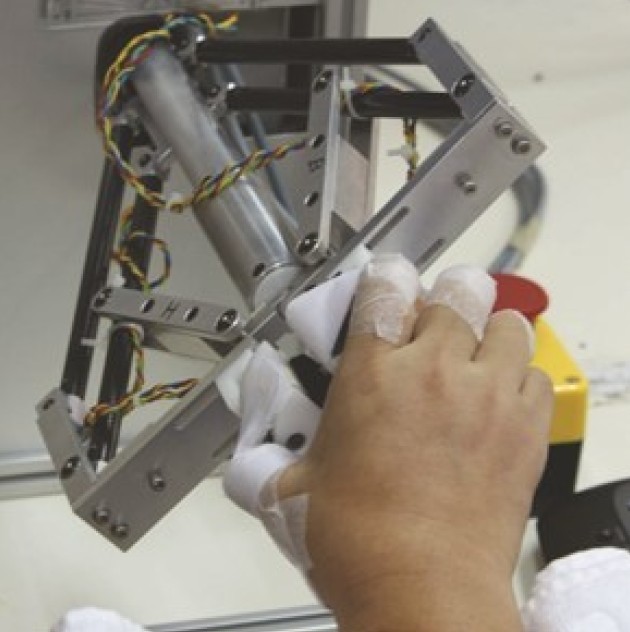
This robotic device is to train grasp and forearm rotation. The first prototype gave rise to different versions at McGill and ETHZ.
[Lambercy et al. (2007) IEEE Transactions on Neural Systems and Rehabilitation Engineering 15(3): 356-66]
HandCare
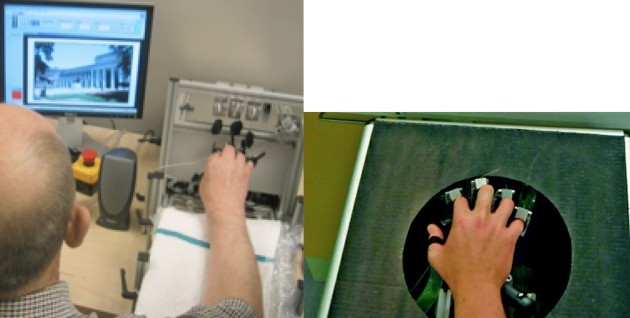
A robotic device to train the fingers function. In the latest version shown here, each finger uses a module with a cable pulling against a spring, thus enabling to open and close the finger without constraining its path.
[Dovat, Ludovic et al. (2009) IEEE transactions on neural systems and rehabilitation engineering. 16. 582-91]
ReachMAN

A three degrees-of-freedom robotic device was developed to train the many activities of daily living that involve arm reaching in addition to hand opening/closing and forearm rotation. The second version is shown here.
[Yeong et al. (2009) Proc IEEE/RSJ Int Conf on Intelligent Robots and Systems (IROS) 4080-5; Tong et al. (2014) Proc IEEE/RSJ Int Conf on Intelligent Robots and Systems 2107-13]
Robotic wheelchair
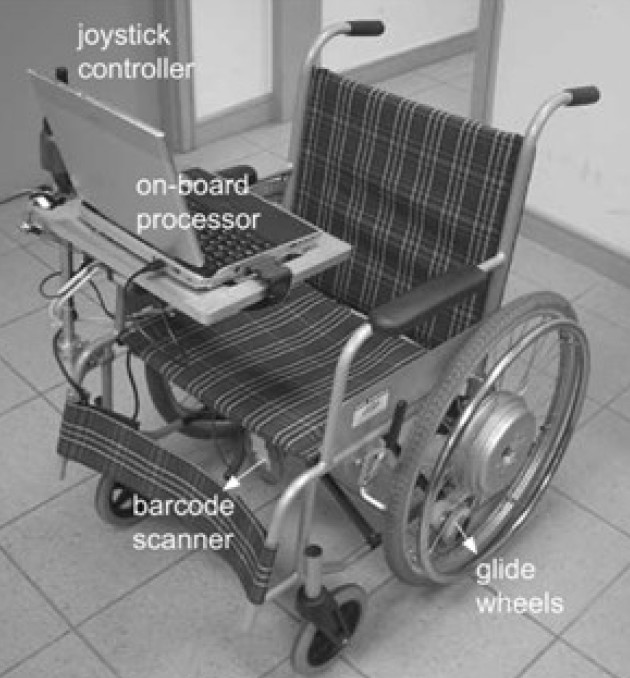
A commercial wheelchair was modified by integrating a computer for modifying the joystick movement to steer the movement along a given path. It was used with individuals with cerebral palsy and also to implement the first brain controlled wheelchair.
[Zeng et al. (2008), IEEE Transactions on Neural Systems and Rehabilitation Engineering 16(2): 161-70; Rebsamen et al. (2010) IEEE Transactions on Neural Systems and Rehabilitation Engineering 18(6): 590-8]
Block sorting toy
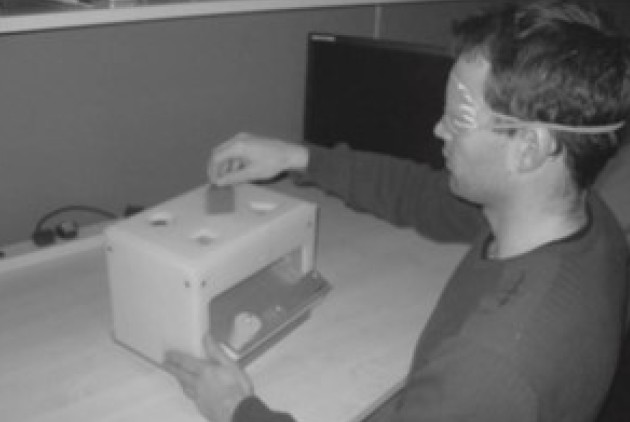
Instrumented with loadcells providing sensing of both contact force and contact point on the box (without external sensor)
[Klein et al. (2011) Proc IEEE Int Conf on Rehabilitation Robotics (ICORR).]
SITAR
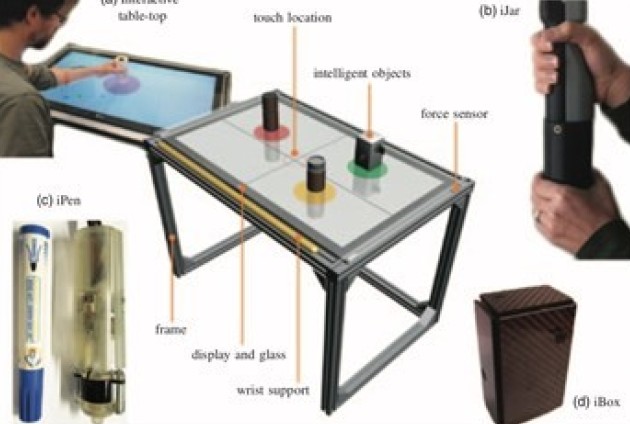
Table top system for task-oriented-training with instrumented objects. Immersive visual feedback is provided by the large monitor covered by a glass measuring contact force and position using loadcells. Was commercialised by Tyromotion as Myro,https://tyromotion.com/en/produkte/myro/
[Hussain et al. (2017) J of Rehabilitation and Assistive Technologies Engineering 4: 2055668317729637]
gripAble
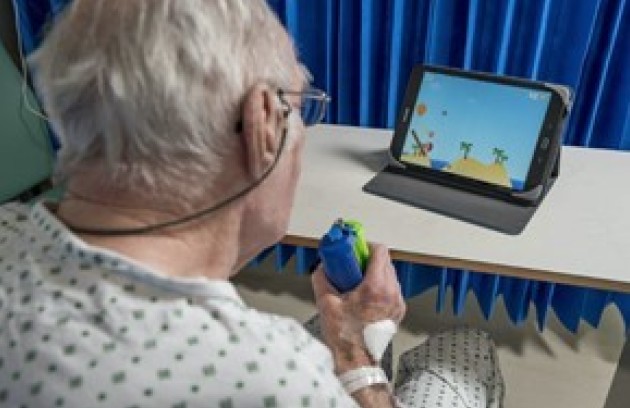
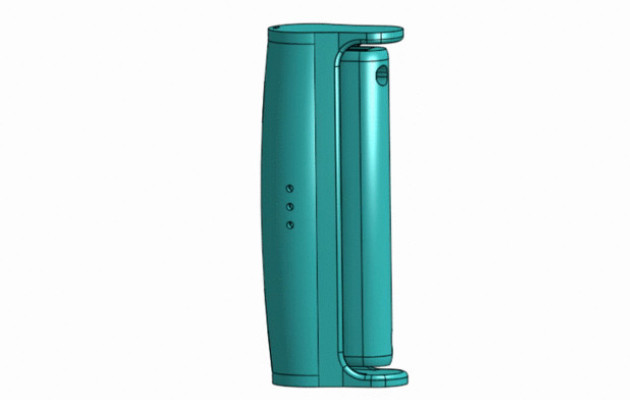
Digital compliant handgrip measuring the grip force and closing. Used with a computer tablet and dedicated games, this is the only system we know that can be used from soon after a stroke at the hospital, to home. It is now commercialised by http://www.gripable.co/.
[Mace et al. (2017) Royal Society Open Science 4(2): 160961]
Haptic interfaces
We developed various robotic interfaces for neuroscience investigation, rehabilitation and assistance.
3DOF

A rigid interface to interact with three-dimensional planar arm movements. It is used at UCL for both neuroscience and clinical studies
[Klein et al. (2013) IEEE T on Haptics 7(2): 229-39]
Hi5
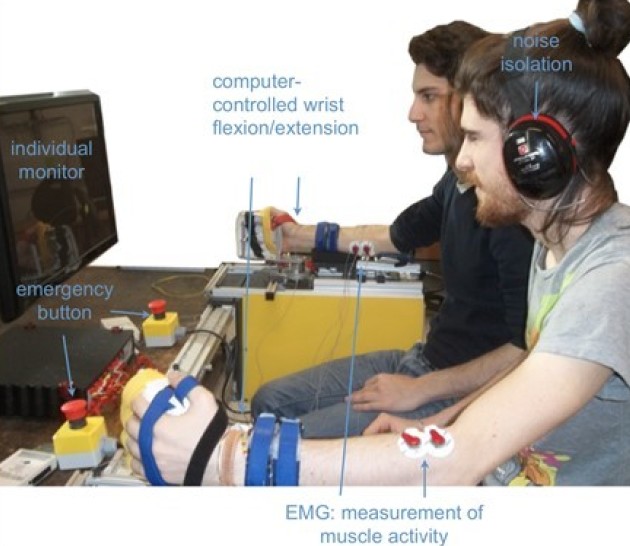
A versatile dual robotic wrist flexion/extension interface to investigate bimanual and human-human interactions at joint and muscle levels.
[Melendez et al. (2011) Proc IEEE/RSJ Int Conf on Intelligent Robots and Systems (IROS) 2578-83]
fMRI compatible pain simulator
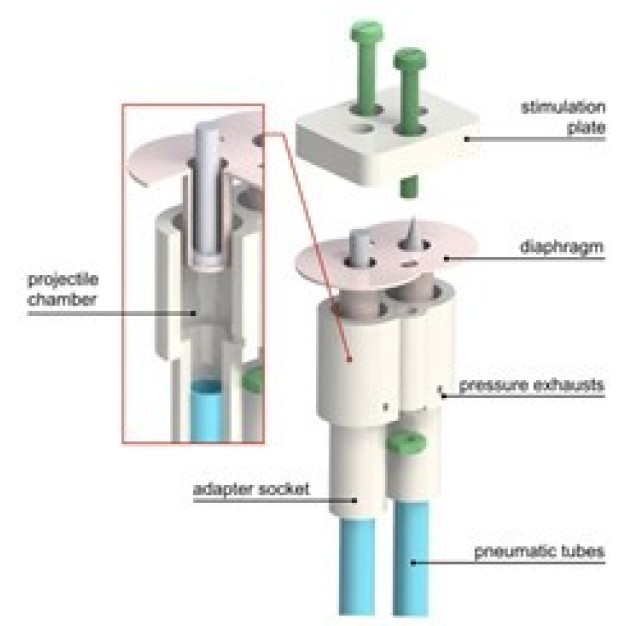
A simple device for the investigation of the human somatosensory system with functional magnetic resonance imaging (fMRI). PC-controlled pneumatic actuation is employed to produce innocuous or noxious mechanical stimulation of the skin. Stimulation patterns are synchronized with fMRI.
[Riillo et al. (2016), Annals of Biomedical Engineering 44(8): 2431-41]
Dual HMan
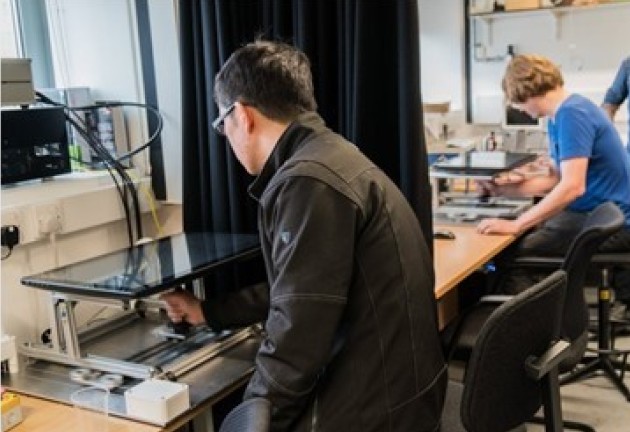
A dual robotic manipulandum to investigate human-human interaction with planar arm movements. HMan has been developed at NTU [Campolo (2014) J Neuroscience Methods 235: 285-97] and is commercialised by https://articares.com/.
Horse therapy feedback device
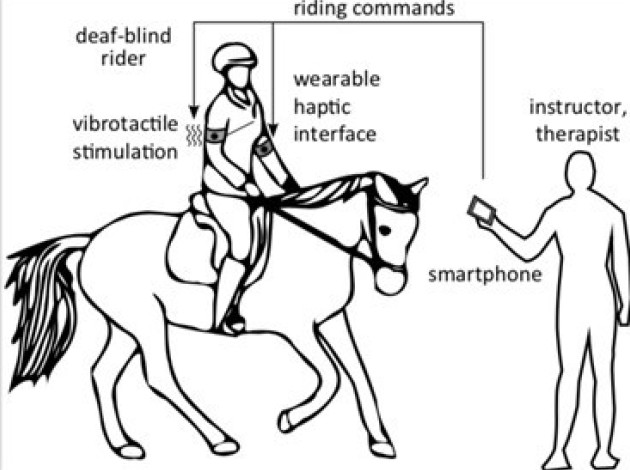
Enables patients to practice horse riding by themselves and so develop their agency.
[Ogrinc et al. (2017) Assistive Technology 1-8]
Haptic bracelet to enable various haptic effects such as haptic waves

The haptic bracelet can provide feedback around the forearm, implement rotary waves etc.
[Ogrinc (2018) IEEE Transactions on Haptics 11(3): 455-63.]
Haptic finger
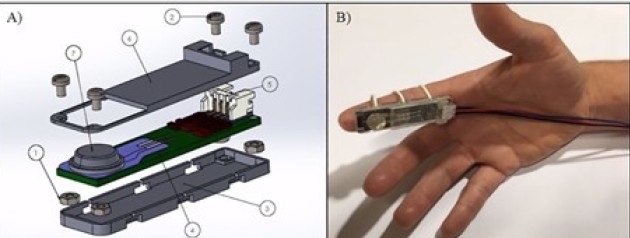
Gently stimulates the skin of e.g. an infant while controlling the force.
[Donadio et al. (2018) PloS ONE 13(11): e0207145]
Portable Hi5 wrist interface
For clinical and neuromechanics investigations with force, position and muscle activation sensing.